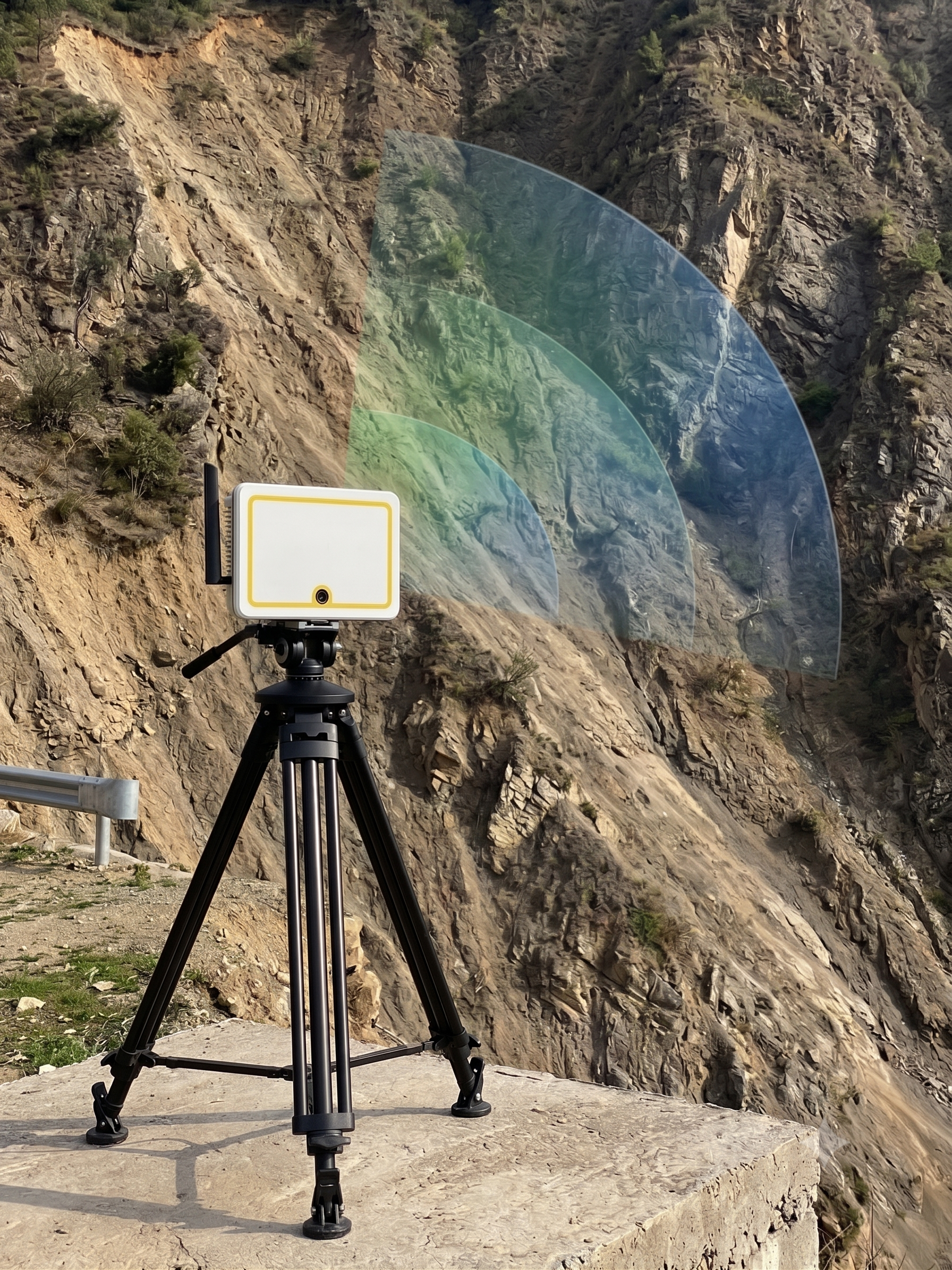
Solid-State MIMO Interferometric Radar
Sub-millimeter deformation monitoring
Precision safety for critical infrastructure.
The limits of periodic
manual inspection
Geotechnical slopes and structures deform continuously under the influence of groundwater, weather, and seismic activity. The transition from stable creep to accelerating deformation can develop over hours or days. Periodic manual measurements — often weeks apart — capture only discrete snapshots and routinely miss the critical acceleration phase.
Periodic snapshots miss the trend
Manual surveys produce discrete data points. The full deformation time history — and its rate of change — remains invisible between visits.
Monitoring gaps in severe conditions
Slope stability is most at risk during heavy rainfall and storms — precisely when manual access is least feasible. Radar operates continuously regardless of weather.
Traditional Monitoring Solutions
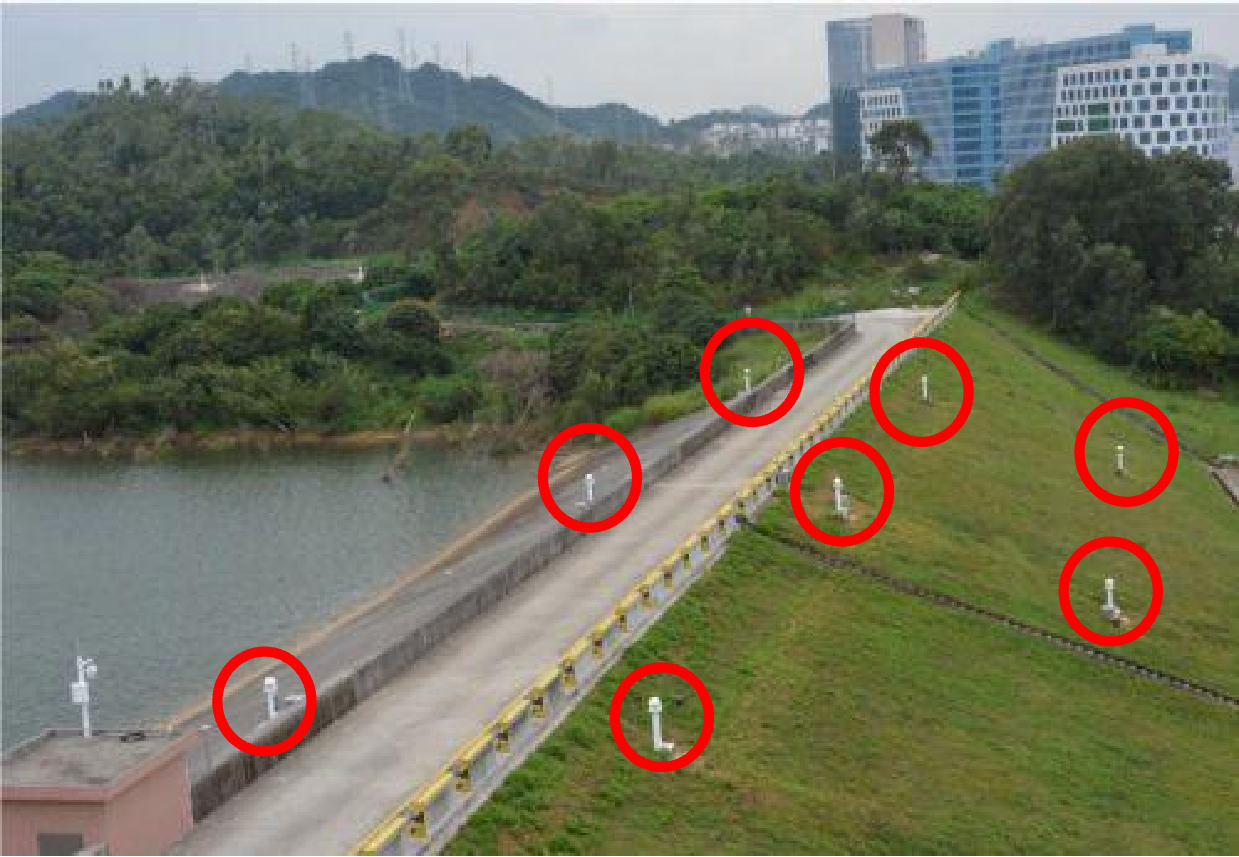
GNSS Station
- Single-point measurement at each sensor location
- Moderate cost for single points
- No moving parts, low maintenance
- Requires sensor installation on the monitored slope
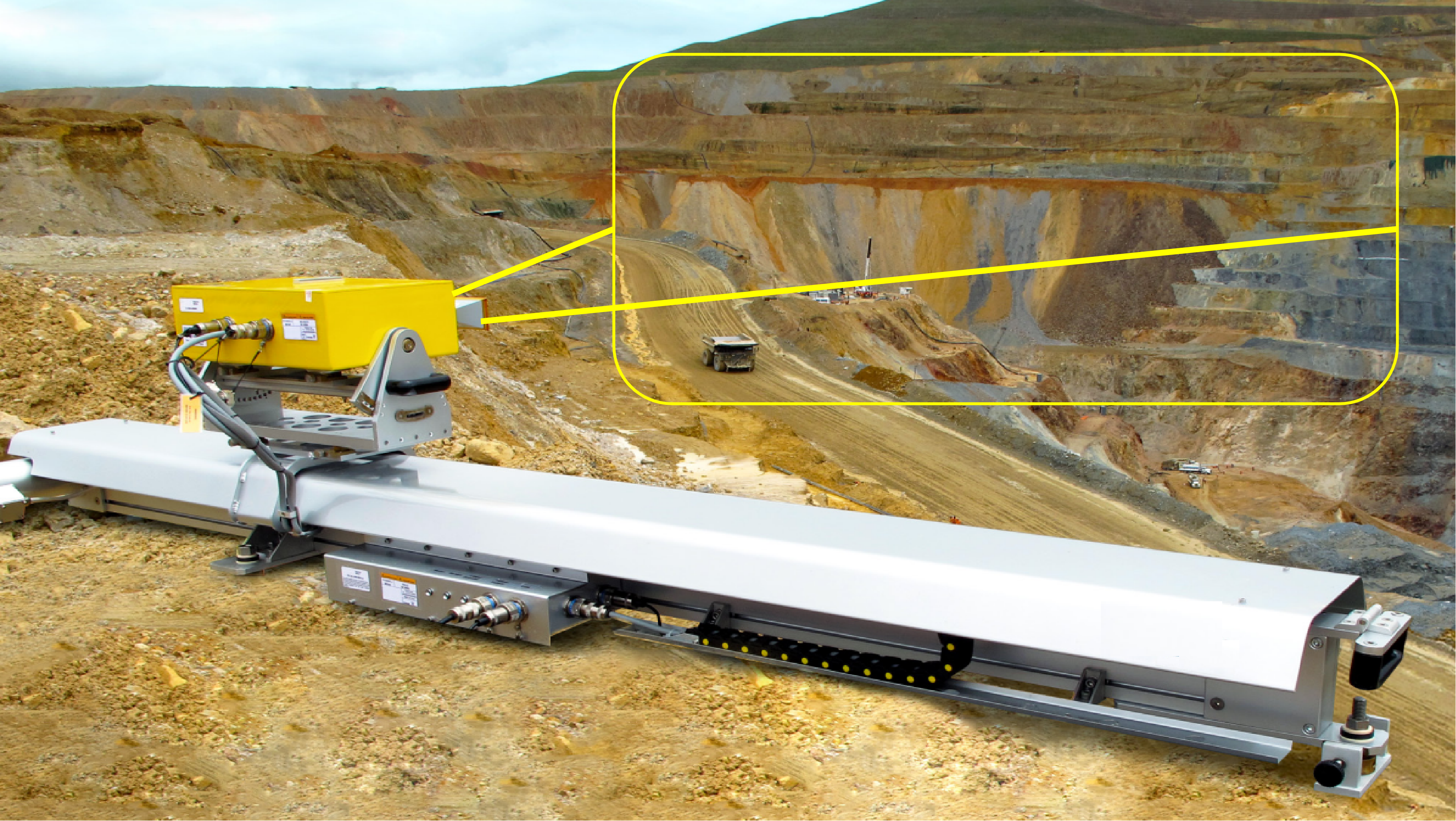
Synthetic Aperture Radar
- Area monitoring, full surface coverage
- High system and operational cost
- Mechanical movement, high maintenance
- Remote installation, safe operation
Focused on deformation radar — ground-based & airborne
K500 · S2000 · F300
Surface Deformation
K500 / S2000 — solid-state MIMO radar for slopes, tailings dams, open-pit mines. Range 500–2000 m. No corner reflectors. 0.1–1 mm accuracy.
View details →Structural Health
F300 — microwave interferometric radar for bridges, buildings, towers. 200 Hz sampling, ≤0.1 mm accuracy. Single-module, under 10 W.
View details →UAV-borne InSAR
Airborne interferometric SAR for wide-area surface deformation mapping.
Coming soonDigital imaging interferometric radar
Zero targets, no slope work
Measures natural surface scatterers directly. No corner reflectors, no installation on hazardous slopes.
Sub-mm continuous monitoring
Interferometric phase measurement delivers 0.1–1 mm deformation accuracy. Continuous, unattended operation.
All-weather operation
Microwave penetrates rain, snow, fog, and haze. −40~+65°C, IP65 rated. For year-round outdoor deployment.
Solid-state, no moving parts
Electronic beam steering. No motors, no rails, minimal maintenance.
Low power, solar-ready
15–25 W average. Supports solar-powered autonomous operation with Ethernet and 4G dual-link.
Multi-level alerting
Near-real-time data to cloud. 45 s per scan cycle. SMS, phone call, and platform push notifications with configurable thresholds.
Designed for 24/7 Long-Term Monitoring
Extreme Environments
−40 to +65°C range, built for harsh field conditions across diverse terrains and climates

Dual-Carrier Failover
Automatic carrier failover for continuous data transmission

Remote Management
Remote diagnostics and firmware upgrades — no on-site visits required
Built-in Camera
Remote visual inspection capability reduces on-site patrol frequency
Discuss your monitoring requirements
Contact us for product specifications, technical consultation, or to arrange a demonstration.